
Bosphorus Office · Field Guide 01
A practical guide to building the right local operation, managing vendors and maintaining control from another market.
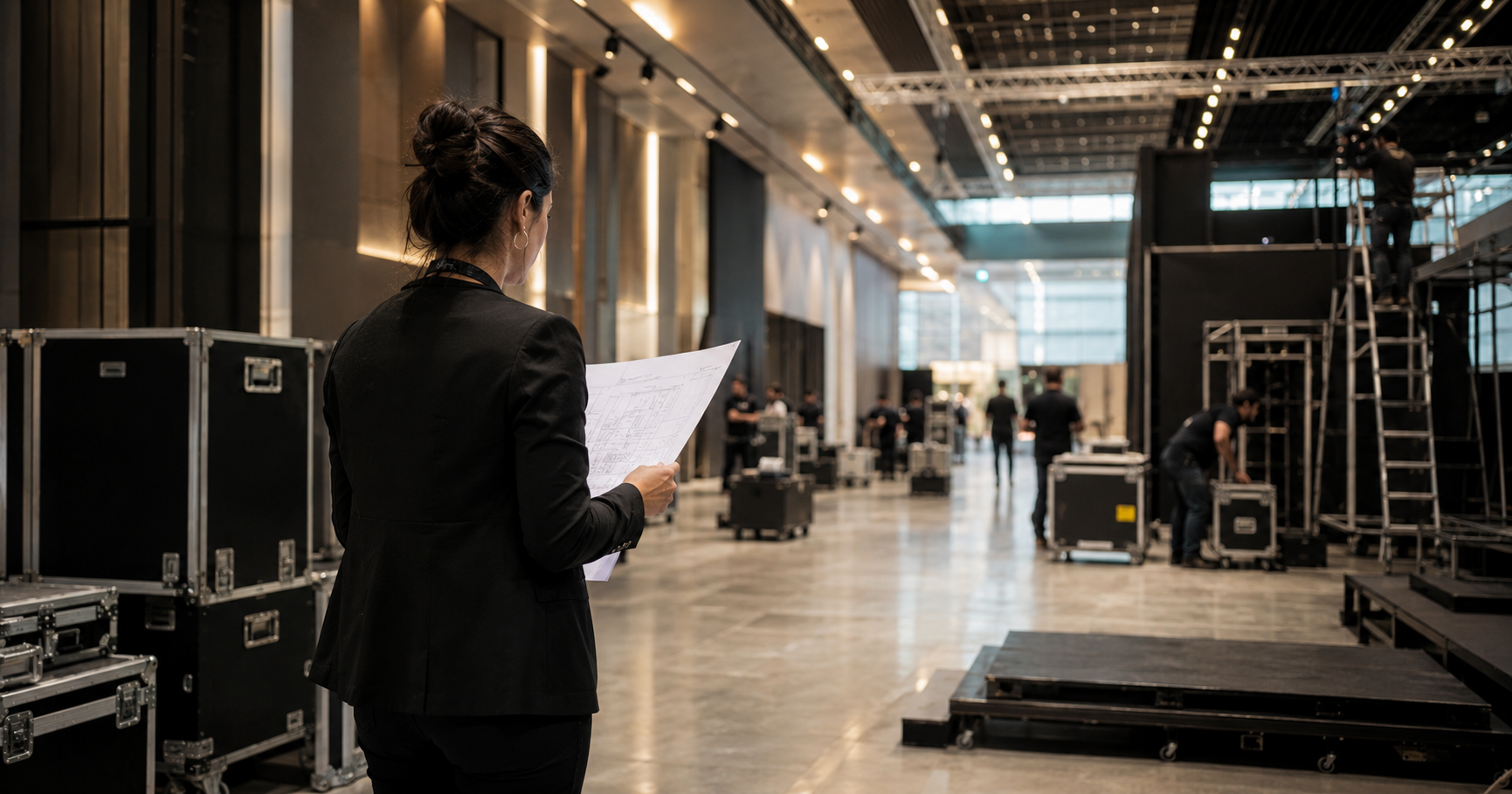
An international team planning a conference, trade show or corporate event in Türkiye faces a familiar decision: build local capability in-house or appoint a partner to run the operation on the ground.
For a defined project or event programme, a permanent local team is often unnecessary. Managing a collection of independent suppliers from another country, however, creates a different problem. Each supplier may deliver its own task, but no one is necessarily connecting the decisions, dependencies, budget and live operation.
That is the role of accountable local leadership.
The operating model is straightforward. The international team retains control of its objectives, brand and key approvals. A senior local partner translates those decisions into a project-specific event operation, appoints and manages the right resources, and takes responsibility for delivery within an agreed scope.
You do not need to build a permanent local team. You do need one clear point of ownership.
Start with the project as it exists today
The first conversation should not be a presentation of standard services. It should establish what the project needs now.
An event six months from delivery with only a market and objective confirmed requires a different structure from one with a booked venue, an appointed stand contractor and four weeks remaining. Before recommending a team or delivery model, a local event operations partner should understand:
- The purpose, format and scale of the event
- What has already been decided or contracted
- Which decisions and workstreams remain open
- The working budget and approval process
- Existing deadlines, suppliers and venue commitments
- Where the client needs local ownership rather than advice
The answer may be a complete project team, a fractional event operations lead for a defined period or focused support for selected workstreams. The structure should follow the project, not a standard agency package.
Before founding Bosphorus Office, I managed complex, multi-workstream programmes around major events across the Middle East and Europe. A single programme could include booth delivery, presentations, one-to-one meetings, merchandise, travel, creative production, budgets and multiple vendors, all moving toward the same live date.
That experience shaped the operating model I built at Bosphorus Office. An event may appear as one date in the calendar, but operationally it is a network of connected projects. The job is to make them work as one.
Build one operating structure
Once the current stage is clear, the project needs a shared operating plan. This should define:
- Each workstream and its owner
- Scope, budget and key deadlines
- Client and local approval responsibilities
- Dependencies between teams and suppliers
- The reporting schedule
- How changes and additional costs will be approved
- Which external conditions are still awaiting confirmation
The purpose is simple: the client, local lead and suppliers should be working from the same version of the project.
Not every detail will be known at the beginning. New requirements will emerge as production develops. What matters is that each one is assigned, discussed at the right stage and brought into the operating plan. An important decision should never remain buried in a message thread with no clear owner.
This structure also protects the client’s time. The international team should not need to manage every local conversation. It should remain informed and in control of the decisions that matter.
Why local knowledge changes the delivery
Local knowledge is sometimes treated as access to a supplier list. Its real value is better operational judgment.
A venue decision is not only about appearance and capacity. Access, load-in conditions, technical limitations, production timing and supplier coordination can all change whether a space works for the intended format. A locally informed review can expose those practical consequences before a commitment becomes expensive to change.
The same applies to vendors. Familiarity with capable people and companies can shorten sourcing, improve communication and make proposals easier to assess. It can also reveal when a quotation looks convincing on paper but is unrealistic for the schedule, specification or production conditions.
This does not mean local is automatically better or cheaper. It means decisions are based on how the project will actually be delivered in Türkiye, not on assumptions carried over from another market. The same operational discipline applies across the markets supported by Bosphorus Office.
How to assess a local operations partner
Trust in event operations should be observable.
Before appointing a partner, look beyond reassuring language. Ask how the team defines ownership, how it verifies important vendors, what the client will see during production and who will be present when the work moves on site.
Vendor selection should follow an impact-based evidence hierarchy:
- Use vendors whose work has already been delivered successfully by the operator.
- For a new vendor, request credible references and relevant proof of capacity.
- If a new vendor controls a high-impact workstream and adequate proof is unavailable, inspect or test the work before final selection.
- Increase the level of verification as the consequences of poor delivery increase.
Not every supplier needs the same level of due diligence. A small, easily replaceable item does not carry the same exposure as a stand build, technical production system or workstream tied to opening readiness.
Warning signs can include unclear ownership, inconsistent communication, reluctance to document scope, unrealistic promises or insufficient proof for an important workstream. One concern may be explainable. A pattern should change the level of control applied and, where necessary, the vendor decision.
What happens when a vendor becomes unreliable
A vendor issue becomes serious when it is discovered late or when no one has authority to act.
During a booth delivery in another market, I saw again why early on-site presence matters: it allowed me to identify errors and missing requirements while there was still time to correct most material issues. The few remaining points were low-impact details.
The lesson is not that experienced teams avoid every problem. It is that hands-on inspection at the right stage creates room to act before an issue affects delivery.
When delivery begins to move away from the agreed scope, the local operations lead should first establish the facts. Which items affect opening or the live experience? Can the appointed vendor recover within the available time? Is an alternative resource required? What decision, cost or approval is needed from the client?
The response should then be documented, communicated and physically verified. A verbal assurance is not a completed correction.
Front-load the decisions that matter
The aim is not to finish every task as early as possible. It is to resolve the decisions and dependencies that become difficult to recover when delayed.
This may include confirming scope, reviewing production drawings, testing a critical supplier, inspecting important work, checking dependencies between vendors and establishing who can authorise a recovery decision.
By the final delivery stage, the team should be confirming, adjusting and responding to manageable changes, not discovering fundamental gaps for the first time. This is the principle behind front-loaded event operations: address high-impact variables early enough that only low-impact details remain close to the live date.
Give the client a clear view from another country
The local partner may own day-to-day delivery, but the operation should never become opaque to the client.
A concise project update should show:
- What has been completed
- What remains open
- Which milestones are on track
- Which items need attention
- What decisions or approvals are required
- What happens next and who owns it
Depending on the stage, this may be supported by photographs, visual proof of completed work, milestone reports, interim meetings and written approvals. During critical delivery periods, short daily briefings can keep every decision-maker aligned without pulling the client into every supplier conversation.
Good communication is not a high volume of messages. It is an accurate view of the project, delivered early enough to support a decision.
Spend for operational impact
Sometimes the correct advice is not to buy.
An expensive item or service may be available and well presented but have limited effect on the attendee, the brand or the quality of delivery. A responsible operations partner should be willing to say so and recommend where the same budget could create greater value.
That may mean prioritising a stronger production element, a more reliable supplier, better attendee flow or another requirement with a more direct effect on the event.
This is not cost cutting. It is budget allocation based on impact. The lowest quotation is not automatically efficient, and the most expensive specification is not automatically better.
Understand what the partner can control
A reliable local partner can be accountable for the quality of its team, preparation, communication, vendor management, documented decisions and response when something changes.
Some outcomes still depend on third parties. A particular venue cannot be confirmed before it is booked. A permit or external approval cannot be promised before it is granted. Supplier availability is not final until it is secured.
A credible partner makes that distinction clear. It takes ownership of the process, keeps dependencies visible and avoids promising an external result that has not yet been confirmed.
Checklist for appointing a local event operations partner
Before appointing a partner for an international event in Türkiye, ask:
- Have they understood the project’s current stage before proposing a solution?
- Can they demonstrate experience with comparable operational complexity?
- Will one senior person hold clear responsibility for the full operation?
- Are scope, approvals, responsibilities and commercial terms documented?
- Can they work with our existing team without adding unnecessary layers?
- How will progress, open items and decisions remain visible to us?
- How are important vendors selected and verified?
- Which work will be inspected physically, and when?
- What happens if a key supplier misses a milestone?
- Will the partner challenge spending that has limited operational impact?
- Do they distinguish clearly between what they control and what depends on third parties?
Strong answers should be specific. They should explain who acts, what is documented, what evidence the client will receive and when an issue will be escalated.
Build the operation you need, for the period you need it
International teams can deliver conferences, corporate events and trade show production in Türkiye without carrying a permanent local department. What they cannot remove is clear local ownership.
The right model is a project-specific operation that fits the current stage, connects the right people and vendors, keeps the client informed and protects the quality of delivery.
Bosphorus Office provides that operational layer for international companies, agencies and event teams. If you are considering an event in Türkiye, we can review its current stage, identify the local requirements and define the right operating structure before production decisions become difficult to change.
Planning an event in Türkiye?
Build the right operation before production begins.
Share the current stage, location and support you need. Bosphorus Office will define the operating structure around the project.